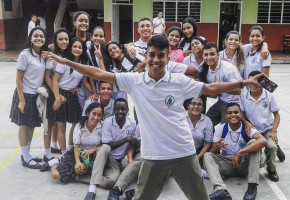
CHANGING THE WORLD ALWAYS NEEDS VOLUNTEERS





Porto Galinhas
Porto de Galinhas is a small beach town 60 km south of Recife. It is a major tourist destination. In fact, it has been voted "Best Brazilian Beach" eight times in a row by the readers of Voyage & Tourism Brazilian magazine. It’s well known for its crystal-clear beach waters and natural pools. Its name (Chicken Port) has an interesting story. According to history, its name was Porto Rico until it became a slave market to supply the plantations of sugar cane. To evade the control of their illegal transactions, slaves were transported with guinea fowl and passwords were created by traffickers for this purpose, hence the origin of the name.
In Porto de Galinhas everything revolves around the sea, year round… But, still, you simply can’t get enough of it!
Beaches: Porto de Galinhas is a tropical paradise. Under its warm crystal clear waters you can witness the breathtaking beauty of the coral reefs in the natural pools reachable via “jangada” (a very simple kind of traditional boat). May be you can even get a glimpse of old shipwrecks!
You have plenty of gorgeous beaches to choose from: Praia do Cupe, Praia do Toquinho (both especially recommended for surfers for its strong waves), Pontal de Serrambi, Pontal de Maracaipe (where the Rio Maracaipe flows into the ocean and you can also get to know Projeto Hippocampus, which tries to protect seahorses) or Camboa and Praia da Enseadinha (both very quiet beaches 13 km -8 mi- from town).
Nightlife: There are many bars and restaurants to serve the weekend party crowd. Finding a place to get a drink is rather easy: along the beach, on either of the two main roads, or from a number of stands set up at night where the two main roads connect near the beach. Sometimes it is possible to see and even participate in an impromptu drum circle at this intersection on weekend evenings.
Nature and Adventure activities: These incredible crystal waters shouldn’t go to waste: they are ideal for snorkeling and scuba diving. Exploring the natural ponds and getting to see the colorful fish and the coral reefs is the experience of a lifetime. Of course, kite surfing, swimming, kayaking or surfing are also options.
Eating: Don’t leave Porto de Galinhas without trying some of its delicious dishes! You can have traditional “tapioca”, “macaxeira”, “beijupirá”, among other Brazilian specialties.
Porto de Galinhas has a tropical temperature. Over the course of the year, temperature stays mostly even and pleasant, fluctuating between 20 and 31°C. It drizzles almost every day in summer, but it doesn’t even bother because it stops almost as soon as it starts. It’s not the same during winter, however: between June and August it rains quite a lot.
The closest airport is in Recife. Once there, it is really easy to reach Porto de Galinhas by land, because it is only 60 km away. Local buses and taxis make the trip to “Porto”, as they call it, and can be taken at the airport and other locations The journey by bus takes between 2 and 2 hours and a half.
The town is small and easily navigable on foot, so getting around isn’t a problem. Buggies, with or without driver, are available for rent at the village.
-Beaches&Islands: Praia Dos Carneiros, Ilha de Santo Aleixo, Muro Alto, Pontal de Maracaibe, among many others.
-Night life & eating: beach bars and discos, tapioca, macaxeira, beijupirá.
-Nature&Sports: scuba diving, surfing, kayaking, snorkeling, kite surfing, etc.
TESTIMONIALS
I am a graduate student in the Department of Spanish and Portuguese at Indiana University. After completing a couple of semesters of basic Portuguese, I wanted to take my language proficiency to the next level by visiting a language school in Brazil. I was impressed by the quality of instruction. My teachers taught me advanced grammar concepts and provided me with written and spoken exercises to practice my new found knowledge. Group lessons provided a context in which to apply what I learned and individual lessons provided me with the opportunity to focus on particular topics. By the end of my six weeks course I was speaking Portuguese better than ever and I was more than satisfied with the results. I have returned to Indiana University where I am currently enrolled in a 500-level Portuguese literature class. I am able to understand and participate in all class discussions because of my experience in Brazil. My teachers there prepared me well! ''Portuguese course. Robert Fritz
''I study art history at the University of Delaware. As an art history major I have particularly enjoyed visiting the twin cities of Cachoeira and São Felix. There, I loved the character of Cachoeira and seeing the architectural restoration projects underway. In Salvador I have really enjoyed the “charme of the city;” it was really relaxed while maintaining the commotion of a big city. People in the city are friendly, welcoming and accessible.'' Portuguese course. Angelina Meehan
''What I really appreciated about the school was how many options it created for us. We had trips to historic sites, a surfing weekend, day-long excursions, and everything was ready for us, Jailson really took care of us. The school also arranged day trips to local festivals with tour guides who knew the layout of the city and made us feel at ease. In the classroom, the professors are easy going, fun-loving, and professional. They knew exactly what I needed to know to communicate in the city. Because of my Portuguese classes, I was able to chat with locals and experience the city in a different way''. Portuguese course. Paul Nithan
''I spent the month of January in Salvador. As a singer, I took advantage of the city’s thriving music scene. and sang in various places around the city, including the Museum of Modern Art’s weekly Jazz music session. There I found the atmosphere lively and open and the musicians friendly and welcoming. Furthermore I also enjoyed singing at music clubs in Salvador’s Rio Vermelho neighborhood!'' Portuguese course. Marianne, Switzerland